
Leading Cadet Tara Nolan joined the Sea Cadets in 2022 and was recently one of the candidates to be First Sea Lord’s Cadet for 2026. It’s the highest accolade an individual cadet can be given.
She lives with dyspraxia, a neurological condition affecting physical coordination, making daily tasks like writing, sports, or self-care difficult. It’s recognised as a Developmental Coordination Disorder (DCD), a condition that can affect every aspect of life. Due to celebrities like Daniel Radcliffe, Florence Welch and Jamie Oliver being vocal about their experience with the disorder, she is reassured that she isn’t alone.

Tara Nolan (2nd from the right) listening intently to her instructor at her unit
“Joining the sea cadets transformed my life.” Recounting her journey with the cadets, Tara shares that instructors structured activities to fit her needs, from power boating to navigation, providing her with a safe space to learn. She never felt excluded because of her condition and was actively encouraged to try out all the opportunities their unit offers, even if they seemed impossible.
“Drill was one of my biggest challenges. Coordination and timing don’t come easily to me, but I refused to let that stop me. I was selected as a reserve for our competitive drill team and started learning for all eight positions in the team. It took months of determination but eventually I knew all the timings and routines.”
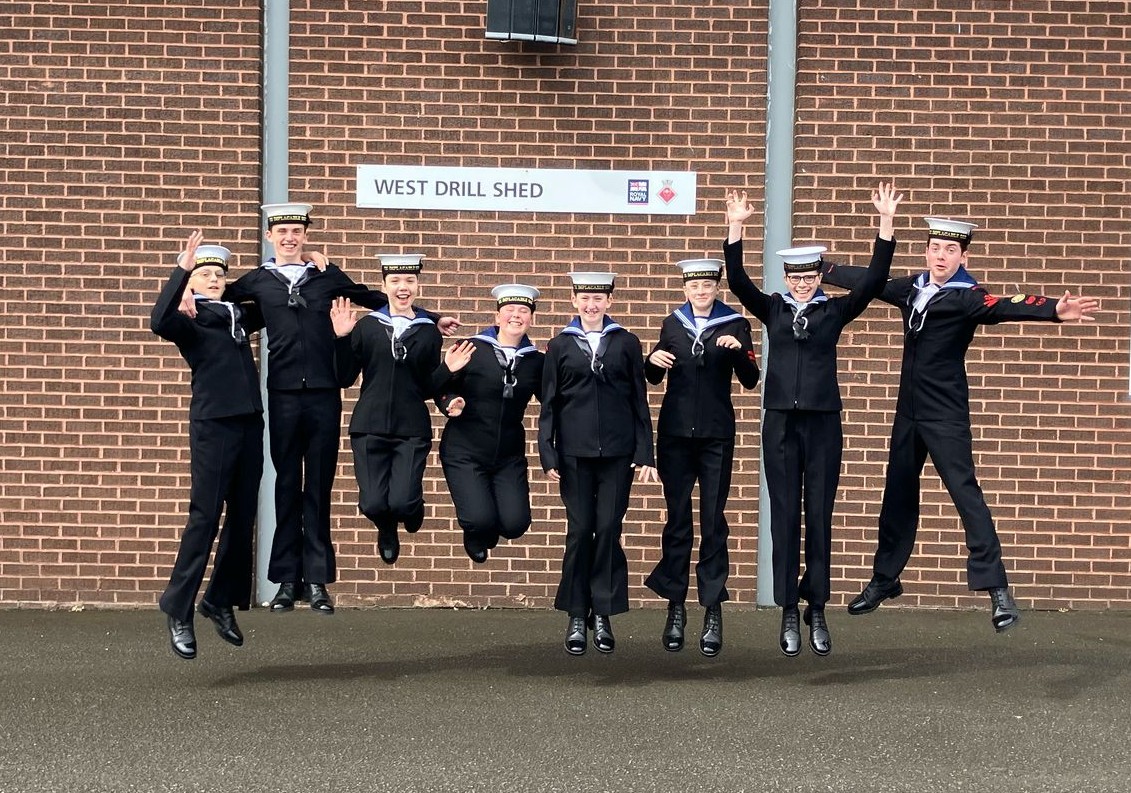
Tara (2nd right again) with her drill team at HMS Raleigh for the national drill & piping competition.
In 2024, she competed in the London Area Drill Competition and achieved second place. A year later she marched in the National Drill Competition as part of the London Area continuity team, coming third in the whole of the UK, a first for her unit, and she had a part in making it happen. Tara was also diagnosed with hypermobility and the various training sessions took a toll on her joints, still, she powered through and didn’t give up.
Tara alongside Leading Cadet Layla Morrell became one of the first two female Leading Cadets in the unit after more than a decade.
“That achievement means so much to me because just six years ago at the age of 10 I couldn’t even tie my shoelaces. Now however, I have a seamanship qualification and can tie most bends and hitches and even took part in a seamanship competition.
“I don’t see dyspraxia as a barrier to progress—it’s part of who I am. The Sea Cadet Corps has given me the confidence to embrace that truth, and to prove that with determination and support, anything is possible.”