
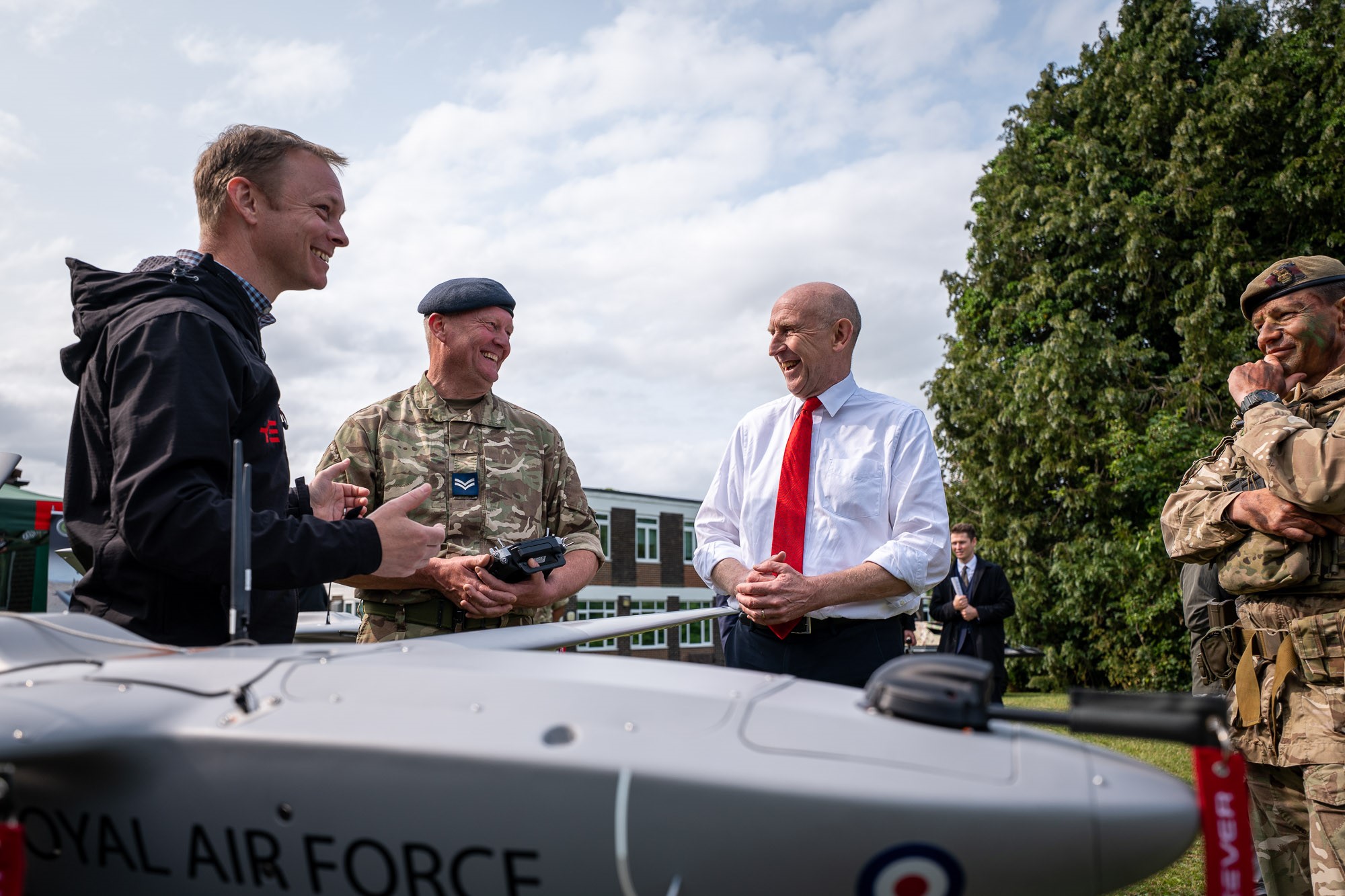
The RAF has introduced a new uncrewed aircraft to operational service called StormShroud. It is the first of a new family of Autonomous Collaborative Platforms (ACP) which will revolutionise the RAF’s advantage in the most contested battlespaces. Members of 600 Squadron are at the heart of this new capability.
StormShroud will support RAF F-35B Lightnings and Typhoons by blinding enemy radars, improving the survivability and operational effectiveness of our crewed aircraft. Uncrewed Air Systems (UAS) are not new to the RAF, and StormShroud has been developed using lessons from the ongoing conflict in Ukraine, as well as other operational theatres around the world.
StormShroud will be operated by 216 Squadron, made up of Regular RAF, Royal Auxiliary Air Force (RAuxAF) and supported by the RAF Regiment alongside other UK Defence personnel. Squadron personnel will be trained to operate in small teams and in high threat environments. RAuxAF personnel are an essential part of 216 Squadron, supporting activities such as launch and recovery of StormShroud as well as the critical liaison and integration with RAF F-35B Lightning and Typhoon FGR4 squadrons.
Members of 600 Squadron have been mobilised to support this new capability and they form the core of 216 Squadron. The platform for StormShroud, the Tekever AR3, is manufactured in Wales and Southampton, delivered through a contract reflecting the platform’s proven capabilities in Ukraine. The AR3 will carry Leonardo UK’s BriteStorm electronic warfare payload, which is manufactured in Luton. It features radar jamming capability that disrupts enemy Integrated Air Defence Systems.

Corporal Michael Burke briefs the Secretary of State for Defence, John Healey, on StormShroud.
Sergeant Gary Drake, Corporal Michael Burke and Air Specialist 1 Kean Noon from 600 Squadron Cyber Operations Flight were mobilised in April 2025 for an initial seven months but such has been their value to the programme they are likely to be extended to a 12 month mobilisation. They are also being supported by Corporal Stuart Vasey from 600 Squadron who is being trained on the platform. They fulfil key roles on the StormShroud Squadron, providing engineering support including rectification control, information exploitation and maintenance.
Talking about the project and his mobilisation, Sgt Gary Drake said: “Being mobilised to support this key Defence project by bringing a new platform into service has been one of the most rewarding times in my career. With a mix of Regular, Reserve and industry partners, the ACP epitomises the whole force concept for rapid capability development. I would recommend getting involved in this programme to anyone should they get the chance.”
The RAF’s exploration of Autonomous Collaborative Platforms (ACP) is part of its broader strategy to embrace technological advancements and maintain its position as a world-leading air force. The ACP Strategy is clear that the best way to optimise our strength against increasingly sophisticated adversaries is through a blend of crewed and uncrewed autonomous platforms operating together. It’s a more agile, adaptable and cost-effective model that significantly reduces the risks faced by pilots in conventional aircraft when flying and fighting in hostile environments. Uncrewed Air Systems (UAS) have revolutionised modern warfighting, both offensively and defensively, as recent conflicts ranging from Ukraine to the Middle East have shown. In a world of increasing threat to the UK and our NATO allies, StormShroud will serve as a powerful deterrent to potential aggressors.